Get the free 5-day Web3 app checklist →
Most crypto-minded users should skip Web2-only video apps and pick platforms that show on-chain utility, sound tokenomics, and Indian KYC/TDS fit. That’s how you choose a tiktok alternative for india that aligns with your portfolio in 2026.
Here’s the answer up front: the “best” TikTok substitute for a crypto investor is not the most viral app, it’s the one with real on-chain usage, clear token supply and unlocks, wallet and KYC rails that work in India, and a token with sinks, not just rewards. Entertainment value matters for retention, but without transparent economics and compliance, you’re speculating on vibes.
After the 2020 TikTok ban, apps like Josh, Moj, and MX TakaTak filled the content gap. They’re huge in reach. However, as an investor, you need more than reach. You need proof of sustainable mechanics: low fees on-chain, audited contracts, clear vesting, and a live creator economy that uses the token for more than points.
In 2026, India’s rules are strict: 30% flat tax on gains from virtual digital assets and 1% TDS on qualifying transfers. As a result, you must track fair market value at receipt and at disposal. Moreover, you should prefer platforms that acknowledge this on-platform with INR views and basic statements, so you don’t scramble at the end of the year.

Why Crypto Investors Need a Different Lens When Choosing a TikTok Alternative
Most “best TikTok alternative” lists rank apps by filters, effects, and trending sounds. That’s fine for viewers. However, for you as an investor or crypto-native creator, those lists miss the point. Your checks need to start with tokenomics, on-chain usage, and whether the app can even operate under India’s 30% tax and 1% TDS regime.
For context, India’s creator scene grew fast after TikTok’s exit. Apps like Josh, Moj, and MX TakaTak brought creators back to short video. On the other hand, these are Web2 stacks. There’s no native token, no wallet, and no chain data to study. Therefore, they’re irrelevant if you’re here to assess tokens linked to content.
What changes the equation is a blockchain layer. Specifically, a token that moves on a chain you can audit, a wallet that supports INR views, and creator features that spend tokens, not just mint them. Without sinks, tips, boost credits, gated NFT access, a token becomes a scorecard. Price action will then track unlocks and hype, not utility.
As a result, a proper crypto-native tiktok alternative for india meets four tests: on-chain rails that are cheap and fast, a public token allocation with clear vesting, Indian KYC/AML, and real creator demand. If one leg is weak, your risk jumps. If two are weak, skip it and save the capital.
Web2 fun vs. Web3 fundamentals
- Web2 metric: DAUs and watch time. Web3 add-on: on-chain transactions per DAU and token sinks.
- Web2 metric: creator tools. Web3 add-on: creator earnings in-token and redemption paths.
- Web2 metric: UI speed. Web3 add-on: chain choice for speed/fees and wallet UX.
“Entertainment value brings users in; token utility keeps value in.”
Also Read!
How to Earn Crypto Airdrops by Completing Tasks as an Indian Creator
Best Web3 Social Media Token Sale for Indian Creators in 2026
How to Evaluate a Short-Video App as a Crypto Investment: A 6-Step Framework
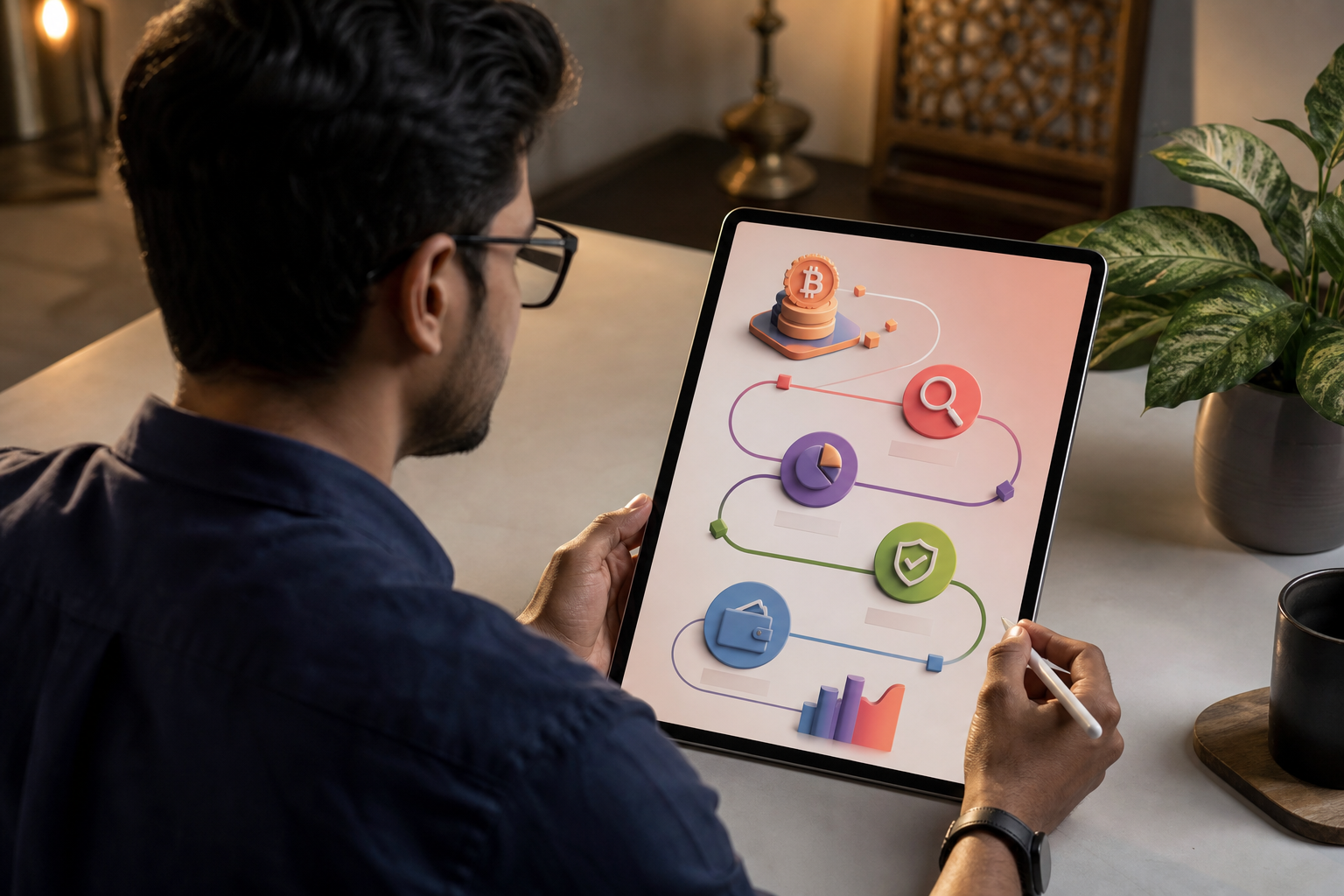
You can apply this 6-step checklist to any Indian short-video platform. It keeps you focused on verifiable data rather than hype.
The crypto checklist for a TikTok alternative in India
Step 1: Identify the chain and native token
- First, check if the app has a native token and which chain it runs on — Solana, Ethereum, Polygon, or others. Chain choice matters. For example, Solana’s design targets low fees and high throughput, which helps micro-tips and small boosts. By contrast, high-fee chains can make $0.10 tips impractical. Confirm the token contract address from official docs or the app’s in-wallet explorer.
Step 2: Study the tokenomics and unlocks
- Second, read the token allocation, total supply, and vesting schedules. Look for actual numbers and cliffs. For example, an IDO priced at $0.4 with 40M tokens and a total pool size of $16M tells you early-stage valuation signals. Vesting matters more: a schedule with 50% at TGE and 50% after 12 months in one pool versus 33.3% at TGE and 66.7% after 12 months in another pool will create different sell pressures. Bigger TGE unlocks tend to spike volatility around listings.
Step 3: Verify real utility, not just rewards
- Third, map out token sinks. Can users tip creators, vote on features, buy NFTs, or boost posts? Or is the token only farmed via watch-to-earn and quests? No sinks means steady sell pressure. Utility you can use today beats promises on a roadmap tomorrow.
Step 4: Check the creator and user base health
- Fourth, gauge DAUs, content uploads, and retention signals. You don’t need exact figures to sense momentum. Instead, sample feeds at peak and off-peak times. If the feed repeats quickly or comments feel like bots, be cautious. A token without a live platform is just a chart.
Step 5: Assess regulatory posture for India
- Fifth, confirm KYC/AML in-app, wallet activation, and whether balances show in INR. KYC being “mandatory for both pools with different processing conditions” is a sign the team takes compliance seriously during token sales. Acceptance of USDC (SPL Token) for purchase also suggests stable on-ramps for buyers who avoid volatile base assets.
Step 6: Evaluate the team, audits, and backers
- Sixth, look for smart contract audits, credible investors, and a public roadmap with timelines. If audits aren’t shared, ask in the community. If the team avoids direct answers, move on. Moreover, check that the token’s circulating supply ratio matches what exchanges display.
- Quick example checks you can run in 15 minutes:
- Token page: confirms IDO token price: $0.4 and Total tokens for IDO: 40M.
- Sale docs: show Total pool size: $16M split across two community pools.
- Vesting table: 50% at TGE vs 33.3% at TGE across pools; remaining after 12 months.
- KYC prompt: appears before purchase; processing differs by pool.
- Wallet screen: shows INR balance and USDC (SPL) acceptance notes.
5 Mistakes Crypto Investors Make When Picking Web3 Social Media Platforms
You don’t lose money only on bad tokens. You lose it by skipping process. Avoid these five mistakes and you’ll already be ahead of most retail.
- Treating airdrops as free money
- Airdrops feel like profit at zero cost. However, a large drop — for example, an airdrop of 50,000,000 $GARI tokens tied to social and engagement tasks — can flood supply. If recipients dump at once, price slides. What to do instead: check vesting for airdrops, claim windows, and any use-to-earn sinks that delay sell pressure.
- Ignoring user engagement and chasing charts
- A token can pump while the app’s DAUs fall. Moreover, some teams pay for wash engagement. What to do instead: spend 30 minutes in the app across two days. If the feed repeats, comments look fake, or creators don’t post daily, skip the trade.
- Delaying KYC and missing allocation windows
- In India, KYC can take 24–48 hours. If you start late, you can miss IDO slots or community pool caps. For example, a KYC process within the app with different processing conditions across pools can block last-minute buyers. What to do instead: complete KYC the day you decide to join a sale, not the day of the sale.
- Treating social tokens like DeFi yield farms
- Short-video tokens live on creator demand, ad spend, and brand deals — not lending APY. Therefore, DeFi reflexes don’t map one-to-one. What to do instead: model value drivers as creator growth, tip velocity, and ad token buys, not only staking yields.
- Overlooking Indian tax on earnings and transfers
-
In 2026, India taxes crypto gains at 30% and applies 1% TDS on qualifying transfers. That includes tokens earned in-app, not just trades. What to do instead: log the fair market INR value when you receive tokens and when you sell. Furthermore, prefer apps where the in-app wallet shows INR balance and basic statements to make this easier.
-
Practical guardrails:
-
Set a personal rule: no IDO unless vesting is longer than your planned hold.
-
Never buy if you can’t state two live token sinks.
-
Keep 10–20% of proceeds in INR for tax; don’t get forced to sell at bad prices.
-
Read sale terms twice; KYC timing kills more entries than volatility does.
For background on how TDS works in India, see this overview of Tax Deducted at Source. Use it to plan your record-keeping schedule.
Also Read!
How to Find the Best Crypto Airdrops for Completing Tasks as a Beginner
Best Short Video App with Crypto Rewards for Crypto Beginners in 2026
Tools and Platforms Worth Exploring for Crypto-Savvy Short-Video Users in India
You don’t need to marry one app on day one. Instead, map the field and test with small stakes.
Josh and Moj (Web2 benchmarks)
Josh and Moj are popular short-video platforms with big creator pools. They’re solid for pure entertainment. However, they have no blockchain layer, token, or on-chain transparency. That makes them irrelevant if your goal is to analyze token utility flows. Best for: viewers who just want content and creators who don’t want crypto rails.
Tools like Chingari (Web3, Solana-based token layer)
Tools like Chingari combine short video with a Solana-based token ($GARI), in-app wallet activation with INR balance display, and a KYC process within the app for Indian users. In past sales, acceptance of USDC (SPL Token) for purchase made entry simple for stablecoin users. This mix puts it on the short list where social features and crypto economics overlap. Limitation: token price can still diverge from app health if unlocks are large or sinks are weak. Best for: creators and investors who want to test tips, boosts, and governance in one place.
Global Web3 social: Lens Protocol and DeSo
Lens Protocol and DeSo are not India-first, but they show how social graphs and content can live on-chain. They’re useful to learn wallet flows, NFT gates, and governance patterns. Limitation: fewer India-specific fiat or INR views. Best for: users who want to understand the broader Web3 social stack before picking an India-focused app.
Portfolio and token tracking
You’ll still need off-app views. CoinGecko helps with token price, supply, and volumes. DefiLlama helps with funding and chain-level views. Limitation: they won’t model app-level sinks or DAUs for you. Best for: cross-checking circulating supply and unlock dates against what you see in the app.
How this maps to your tiktok alternative for india search
- If you only care about content, Web2 is fine.
- If you care about tokens, test one India-ready Web3 app with KYC and INR display.
- If you want to learn, try a global Web3 social first, then come back to India-specific rails.
Book a free tokenomics review →
What to Do This Week: Your First Steps as a Crypto-Minded Short-Video User
Day 1.
- Download two Indian short-video apps. Spend 15 minutes each judging content quality, spam, and UX. As you watch, ask: would I tip here? This grounds your tiktok alternative for india choice in real use.
Day 2.
- For any app with a native token, open CoinGecko. Check market cap, circulating vs total supply, and 24h volume. Therefore, you’ll see if unlocks dwarf daily liquidity.
Day 3.
- Find the whitepaper or litepaper. Confirm allocation, cliffs, and vesting. For example, note whether vesting is 50% at TGE and 50% after 12 months, or 33.3% at TGE and 66.7% after 12 months. Bigger TGE opens mean more near-term churn.
Day 4.
- If you plan to join sales or in-app earns, finish KYC inside the app. In India, processing can take 24–48 hours, and different pools can have different KYC processing conditions. Do it now; don’t miss allocation windows.
Day 5.
- Set up a small position or just engage to earn any airdrops. Then, record the INR fair market value at receipt and at disposal for taxes. Furthermore, if the in-app wallet shows INR, screenshot balances for your files. Your goal is to learn flows, not to “win” on day one.

Remember, the best edge in 2026 is being a real user. You’ll see utility gaps faster than any chart watcher.
Get the free 5-day checklist →
Key Takeaways for Choosing a TikTok Alternative in India
- Entertainment alone won’t cut it; for a crypto thesis, you need on-chain utility, clear vesting, and Indian KYC/TDS alignment.
- Chain choice matters for micro-spends; read fees and throughput before you trust tips and boosts at scale.
- Airdrops (e.g., 50,000,000-token events) can suppress price if sinks are weak and recipients dump at TGE.
- KYC timing is alpha; finish it early so you don’t miss IDO allocations or community pool caps.
- Use sources once and log taxes: 30% gains tax and 1% TDS mean your INR records are part of your return, not an afterthought.
Ultimately, a credible tiktok alternative for india ties real user behavior to on-chain flows you can verify, and that’s what you should back with your time and capital.
Educational content only, not financial or tax advice. Digital assets are volatile; check the rules in your country before you buy, sell or earn tokens.